Stories: Frank Whittaker
Related
From the 1st Battalion page
Jack Bibby
Read Jack Bibby's story
Ronnie Turner
Read about Ronnie Turner
Related Locations
May I say at the outset that I was not a career soldier and until being drafted to the Army after RAF Aircrew awaiting training, I had not heard of the Lancashire Fusiliers. After initial training I ended up at 6ITC Berwick on Tweed and Alnwick where the three regiments represented there were The West Yorkshire Regiment, The King's Own Yorkshire Light Infantry and the Lancashire Fusiliers. As a born and bred Lancashire man, (Chorley, Lancs) my destination was the LFs. My age determined my destination after training, which meant that having turned 19, five days before 1st Sept., it was to be the Far East, with the designated unit the 1st Battalion The Lancashire Fusiliers.
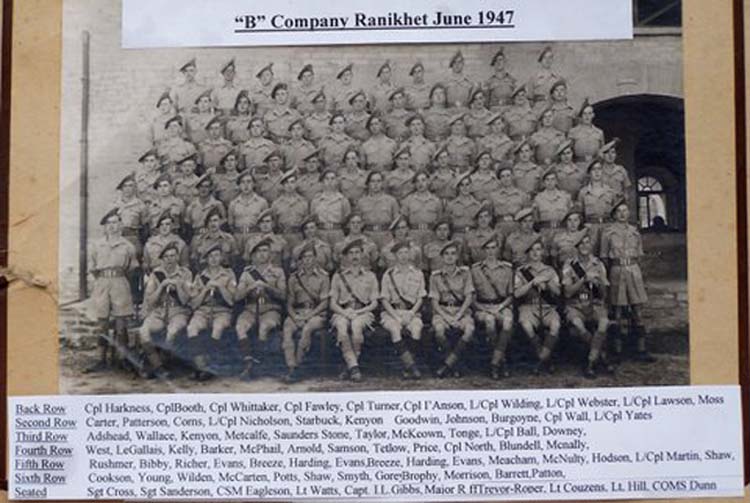
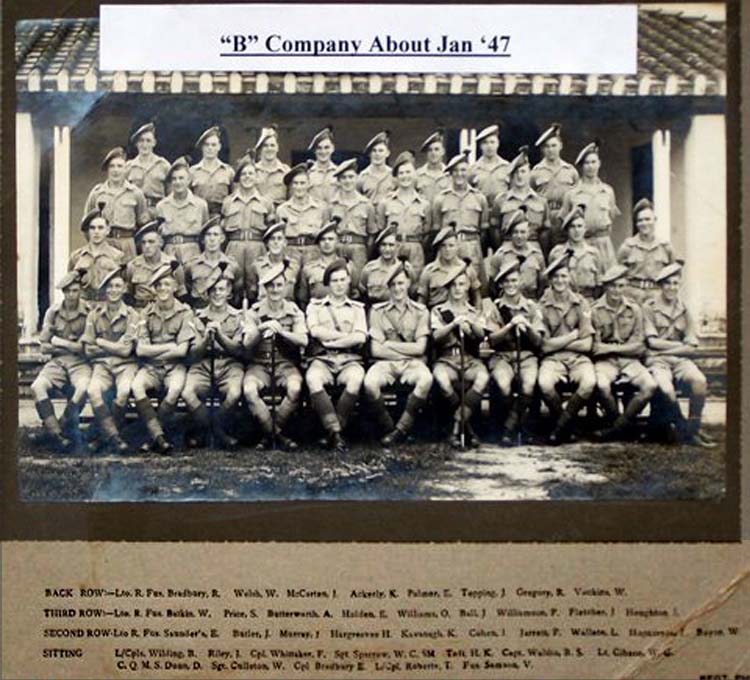
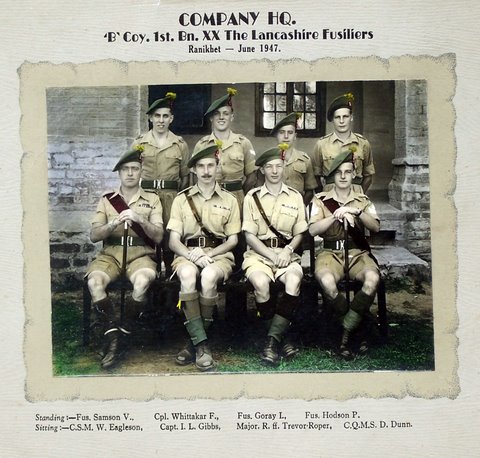
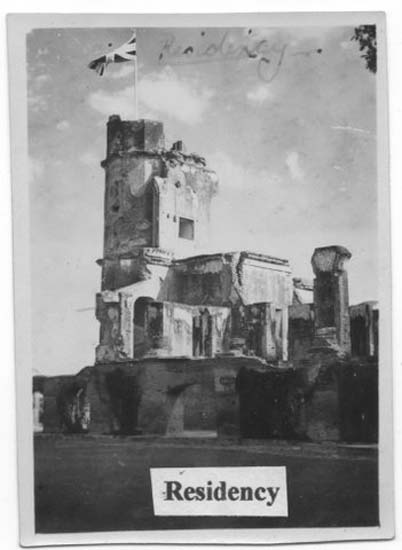
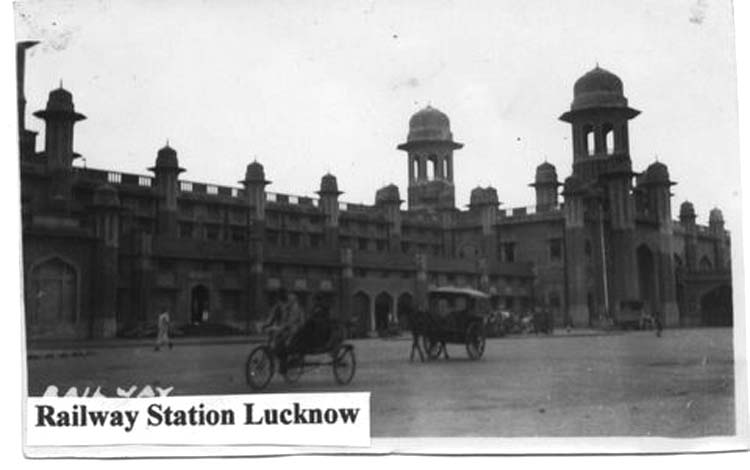
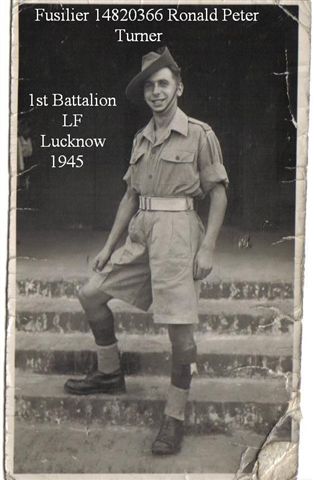
By this time the war was over so there were no great worries as to where we went, so we sailed to India on the MV Georgic on 5th Sept 1945,arriving in India at about the 18th. After about ten days in the transit camp at Kalyan, we entrained for Lucknow and the 1st Battalion. Lucknow of course being one of the battle honours dating from the Indian Mutiny (Or uprising as they liked to call it) 1857 We were met at the railway station by transport and the RSM who soon made it known who was in charge. Little did I realise that that was probably the last time we would call him the RSM, but Kitna to all and sundry. For any one not having served in India, the urdu for asking the price of anything was "Kitna pice", so it was not a big leap to the nick name Kitna Price.
We duly arrived at our barracks which was the old stables of a cavalry regiment in Dilkusha gardens which were not very promising. The floors were very uneven and there were no fitted punkhas. The gardens bit was the name of the area, not the position of our billet. Later in 1945 we were moved to much more comfortable quarters which had been the original 131 Indian Hospital. These quarters were much better and consisted of a block for each company. The layout was typical of a hospital with what would have been a ward at each side of a communal area and two offices in the middle. I would estimate that each block would hold 80 men. The beds were also of hospital type made from webbing rather than seagrass.
The buildings were all raised from the ground and had verandas, so it was a good protection from some of the nasties such as snakes We were split into various companies and my home for the next 2yrs. was "B" Company. The company commander at the time was Major Porter. I had been made a draft conducting L/Cpl and I was allowed to keep the rank. Very shortly afterwards I was offered the position as company clerk which was a position I cherished for the rest of my service.
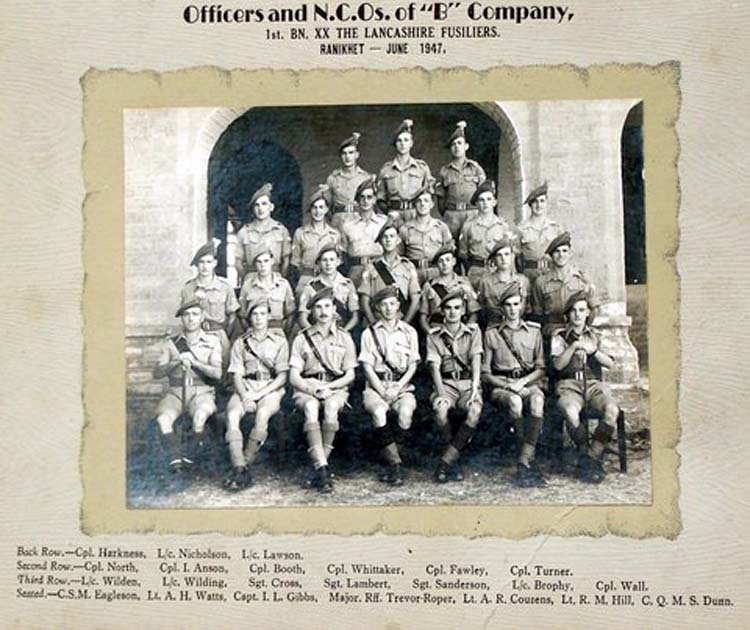

As the war had ended, the battalion became an independent battalion with nothing very onerous in the way of duties which consisted mainly of field training, route marches and the inevitable drill parades generally conducted by Kitna himself.
There was the battalion drill parade on Wednesdays and the COs or adjutants drill parade on Saturday. Often in between there were individual company drill parades also conducted by Kitna. These were something to be feared as because of the smaller numbers you could get individual attention which was not a nice experience.
Kitna had a fearsome reputation, but I found that if you kept your nose clean there was nothing to fear He was a man with a sense of humour and I always thought that you could detect a slight smile at some of his comments which he found a joke. During one of the company drill parades, Kitna was again prowling close to the front rank when, pointing with his cane almost up the nose of a fusilier, he said "What's your name boy?" He answered "Price Sir" He took a few moments to digest this and then moved to another fusilier who was also Price. He took a few moments to think about this and said "Are you a company of Prices There is only one Price in this army dismiss. So, short drill parade. Apart from the usual drill parades, the subaltern, officers received their own drill parade to bring them up to scratch.
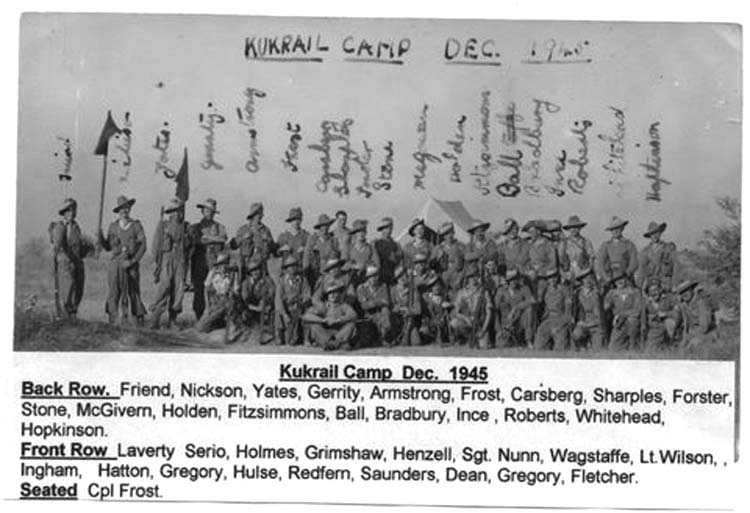
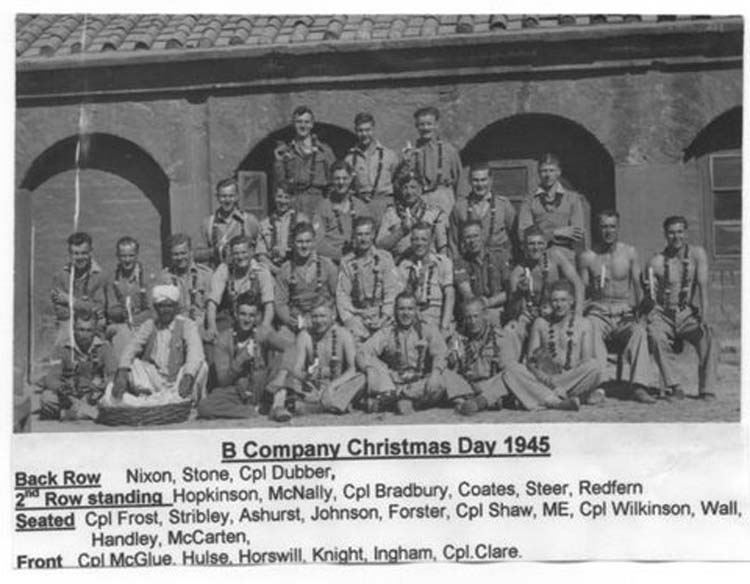
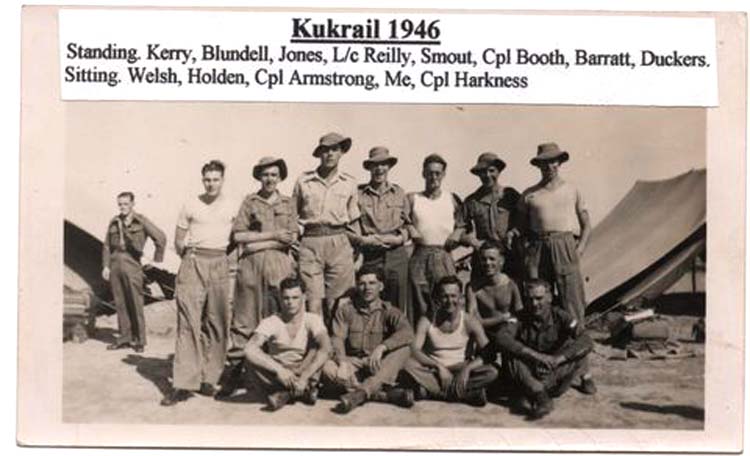
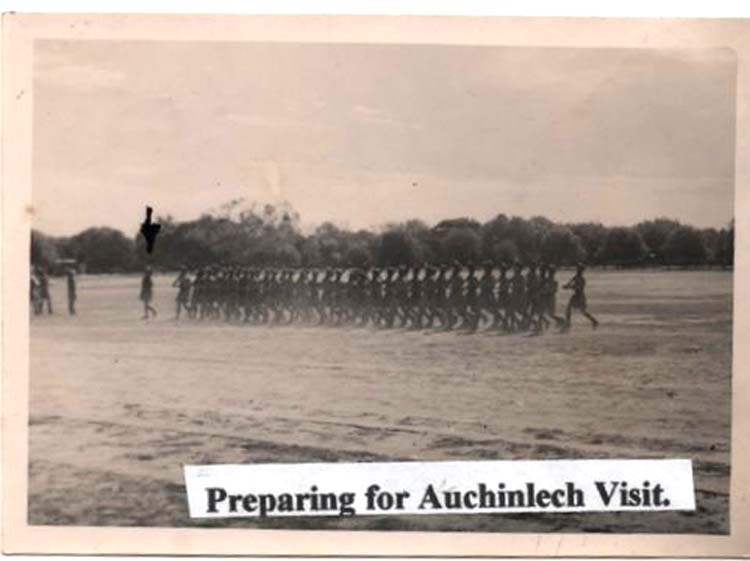
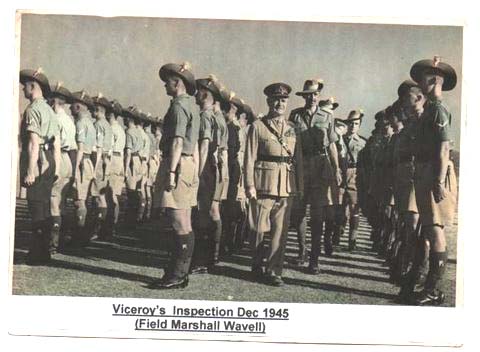
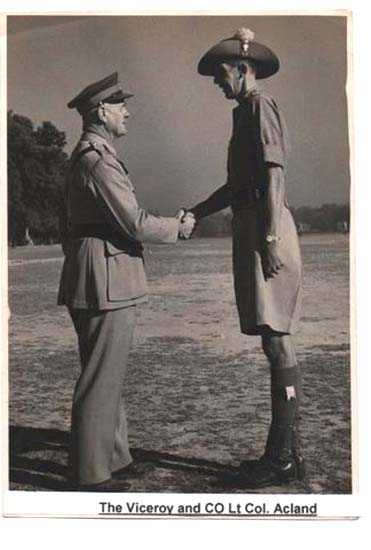
At one time my office was situated near what was called the drill shed, but I think it was originally a mess hall which was really only protection from the sun. Kitna always carried a heavy cane which he positioned close to the nose of an offender when he was berating him, in this case a very junior officer. His retort was, " You're a funny little man aren't you---- ------------SIR" The outstanding event of 1945 was the visit and inspection by the Viceroy of India Field Marshal Wavell. Drill preparations for this were very intense right up to the day. When the battalion was lined up, the bearers (servants) were marched round to dust off boots. The inspection and march past went off without incident. The viceroy stayed at the governor's residence and a guard was mounted composed of NCOs only.
As a matter of interest the following is a copy of "B" Company distribution which I have filched from the photo album of 2nd Lt Lovelady and dated Jan 1946. I actually typed this roll call and I retype it for clarity if anyone is interested.
It was typed on a very old Royal typewriter in dire need of a new ribbon, and we never had white paper but something closely resembling brown paper.